
17 Jun São Paulo: The driving force behind Brazil’s sustainable economic rebound
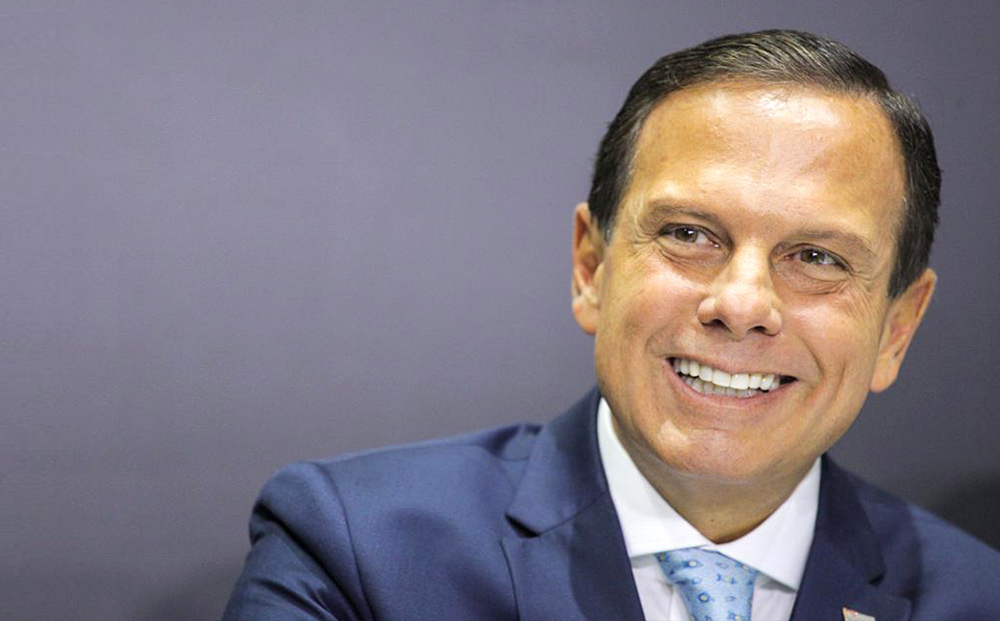
João Doria, Governor of São Paulo, unpacks what makes the state an attractive destination for foreign investment
Q: According to a recent Reuters article, Brazil’s economy grew by 1.2 percent in the first quarter, faster than economists had expected, as the recovery in services and investments brought Latin America’s largest economy back to the size it was in late 2019, before the pandemic. Could you give us an overview of the current economic situation of the economy of São Paulo at a macro-economic level?
In the first trimester of this year, São Paolo grew 1.7 percent, which means it grew more than the rest of Brazil put together. In addition, predicted gross domestic product (GDP) growth for this year in the state of São Paolo is more than 6 percent. Again, this is 50 percent above the expected GDP growth of the whole of Brazil. São Paolo represents 36 percent of the economy of Brazil: we are a nation within a nation. Our strengths are in the industrial, commercial and service sectors, where we also lead the country in economic terms. On top of this, the state is the most prominent job creator. In this first trimester, we generated 246,000 new jobs. Despite the pandemic, the perspective we have here in São Paolo is very promising.
Q: With the national GDP falling 4.1 percent and the global economy retreating 3.5 percent, São Paulo stands out with a registered growth of 0.4% in 2020. This is an important statistic and one that inspires confidence in the management of the state. In that light, could you detail the state’s policies to protect the economy during the pandemic and prepare it for the immediate future?
The reason is that we have a liberal government which is pro-business and pro-private sector. This liberal vision contributed a lot to the economic growth of São Paulo, especially in 2019 and 2020. You may ask why: it is because in 2019 São Paolo started a large program of privatization of the economy. We created concessions in the area of infrastructure, roads, trainlines, metros, airports, ports and public parks. In 2019 and 2020 São Paolo received 40 billon Reais in foreign direct investment (FDI), equivalent to $10 billion. These numbers will continue growing across the next 18 months as this initiative takes hold of many areas of the state. We have many concessions through public private partnerships, which we know will bring many jobs to the state and lead to an activation of the economy. We are a liberal government which is trusted by the outside world. We have a juridical contractual structure that is compliant and robust. A foreign investor does not have any doubts when thinking of investing in São Paolo. On top of that, our political stability makes all the difference.
Q: Growth figures in the U.S. and China for the first quarter of this year are even better, and most analysts anticipate higher-than-expected global economic growth. As we know, the state of São Paulo is very much a part of the global economy. What was the impact of the resumption of global trade and investment for the state of São Paulo over the last year and a half?
São Paolo is a globalized state. We are deeply embedded in the world economy and have dealings with high profile institutional investors on a daily basis, be they from China, Japan, Europe, South Korea, the U.S., Canada or certain other Latin American countries. We have multilateral connections with all of these nations, which is a characteristic that has helped us attract more investment and to establish São Paolo as a global state. Brazil has 27 states, but only one state governor was invited to the World Economic Forum in Davos in the last two years. The reason is that we have a larger economy than Argentina, Peru, Colombia, and Chile, and we are just behind Mexico and the whole of Brazil itself.
Q: To protect the population against the impact of the coronavirus campaign, the government of the State of São Paulo launched the Retomada 21/22 plan, which features 19 infrastructure projects that are expected to raise around $6.63 billion in investments over two years. We know that investments in critical transport and infrastructure will play a key role in this plan. What else should our readers know about this plan and the potential opportunity for FDI?
We are following the Retomada 21/22 plan that is being coordinated by Henrique Meirelles for the next two years. We expect that, by the end of 2022, we will have passed $60 billion in terms of international investments. This investment will fall in the sectors of infrastructure, technology, commerce and industry. We are going to repeat this exercise in 2023 and 2024. It was in São Paolo, through the Butantã institute, that the first south American vaccine, Coronavac, was created. This institute signed a partnership agreement with the Sinovac laboratory in Beijing, China and this permitted the distribution of this vaccine to many corners of the globe. We also have a second vaccine, called Butanvac, which has been developed by Butantã and Mount Sinai in New York. This meant that Brazil did not have to import vaccines: another example of São Paolo’s technological capacity in the areas of medicine and innovation.
Q: Integrated solutions for urban development and social inequality that mitigate climate change and prevent biodiversity loss can create opportunities for cities to deliver green, low-carbon, competitive growth, and build resilient, inclusive and livable societies. Could you detail the policies of the government of São Paulo in its commitment to innovation and sustainability?
This is a very important point. In São Paolo, investment opportunities are sustained through a significantly diversified economy which respects environmental stewardship. We respect the environment and we are signatories of the Paris Agreement. This upcoming November we will be in Glasgow, Scotland, to renew São Paolo’s commitment to climate control and low carbon emissions. Ours was the only state in Brazil to increase forest cover by 5% in 2019 and 2020. We do not have deforestation, whether legal or illegal, in our state. The largest environmental project in Brazil also has roots in São Paolo, where we will depollute the Rio Pinheiros. This is a significant investment to clean up the river that divides the city of São Paolo. The river is going to be clean by the end of next year (2022). This will then allow for us to create two large public parks which will flank the river on both sides.
Q: As we all know, São Paulo plays an important role not only in Brazil, but throughout the southern hemisphere. From its economic origins as an exporter of industrialized coffee, the state is now home to industries ranging from aeronautics, automotive, and oil and gas, as well as technology hubs. Could you please talk about the main facets of São Paulo’s diversified economy and which sectors are seeing the greatest growth?
The state economy is extremely diversified, and for that reason it holds much sway internationally. Some 22 percent of its economic output comes from agri-business, and we export almost 60 percent of what we produce. We are the world leader in sugar, ethanol and orange juice exports. It is the most industrialized region in Latin America. Another example is the factory of Embraer, which produces civil, commercial, private and military aircraft. We also have a strong healthcare industry, boasting Latin America’s most advanced hospitals with regard to state-of-the-art facilities and technologies. The largest production of pharmaceuticals in the whole continent is in São Paolo. We are also the largest outgoing source of tourists in all of Latin America.
Q: Would you like to give a final message to Newsweek’s international readers?
We offer many opportunities for international investors. We play by the rules and have clear guidelines on how to conduct business in our state. We are the largest consumer market in Latin America, with 46 million inhabitants, which is equivalent to the population of Spain. The largest international airport and seaport in Latin America are also here. This state also boasts stability in its governance, which cannot be said of many states in the region. It is worth mentioning again that we are liberal and pro-private sector, and we understand the importance of external investment. We are a no-paper government, which allows for businesses to be created in just one day, removing one of the biggest hurdles for any international investor.
No Comments